
Article: FROM FLEECE TO FELT: HOW WE TRANSFORM WOOL INTO FELT
FROM FLEECE TO FELT: HOW WE TRANSFORM WOOL INTO FELT
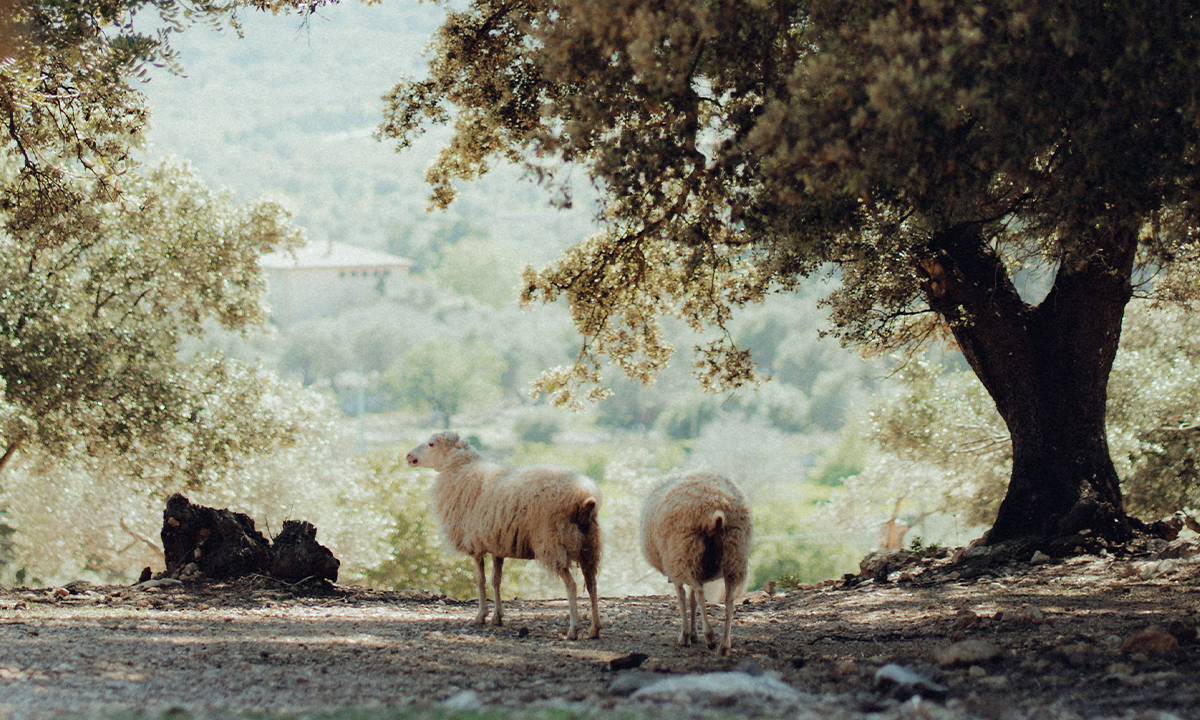
At SONMO, we believe that understanding a material also means understanding everything that happens before it becomes a product. In our felting workshop, the wool from our Mallorcan sheep goes through different stages until it is transformed into a new material.
The journey begins long before it reaches the machines. It all starts with shearing and fleece selection, where the wool to be used is carefully chosen and separated by color. Working with wool from the same breed allows for homogenization of its characteristics and greater consistency in the final result.
Once selected, the wool is washed and prepared to return to the workshop. That's where its transformation begins.

The devil: opening the wool
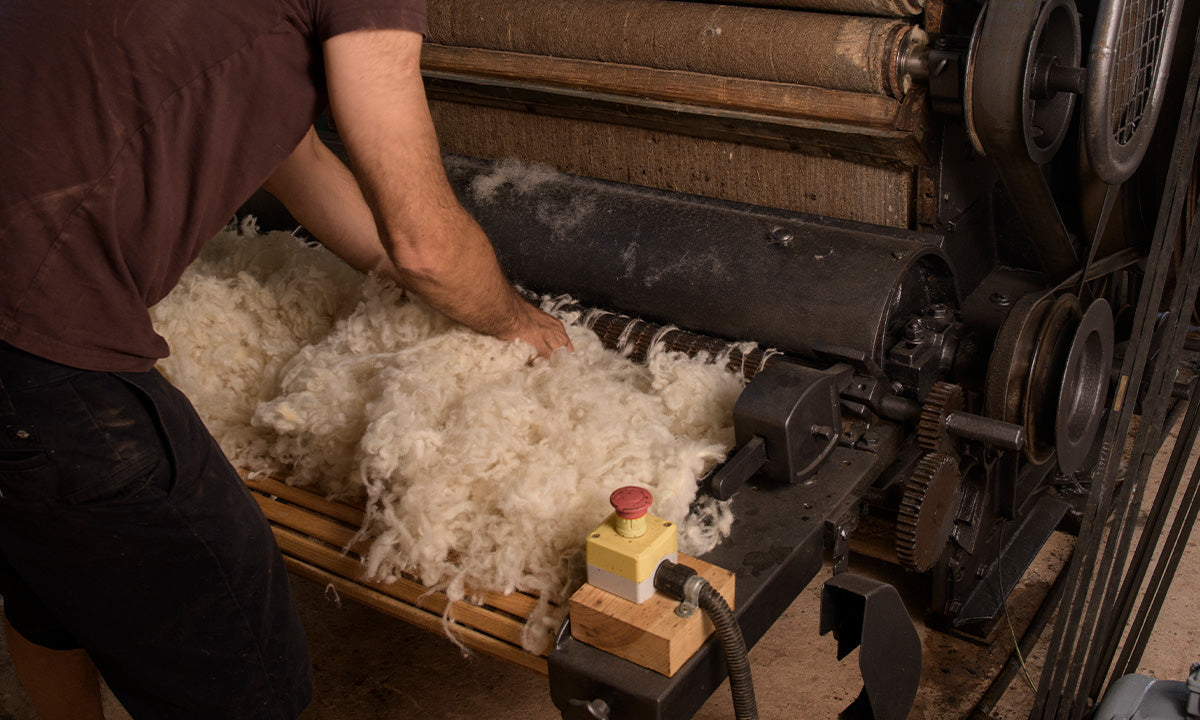
The wool arrives at the workshop washed, but still very compact. The first step is to pass it through the devil or wool picker, a machine that opens and fluffs the fibers, breaks up small knots, and restores its volume.
At SONMO, we use a machine from the 1940s that, despite its age, remains a fundamental tool for preparing wool and improving its performance. After passing through the devil, the wool is light and fluffy, ready to continue to carding, where the fibers are aligned and form the batt.

From carding to batt
The next step is carding. The fibers pass through a machine that aligns them, stretches them, and combs them to form a continuous layer of wool called a batt. At this stage, the amount of fiber and the thickness of the final material are controlled. This precision allows for greater uniformity and working with different thicknesses according to the needs of each piece.
When wool becomes felt
Felting begins from the batt. Unlike conventional fabric, which is constructed by warp and weft on a loom, felt is a non-woven fabric: the fibers intertwine and compact together.
At SONMO, we use a needle felting system to create uniform, strong, and flat felt sheets. The machine has hundreds of barbed needles that move up and down continuously, causing the fibers to intertwine and compact, and joining the different layers of wool.
The very structure of wool makes this process possible. Its fibers have small scales that, through friction and heat, hook together. This is the same property that causes a wool sweater to shrink and felt when machine washed. In the workshop, this process is controlled to achieve the characteristics we seek in the material.

The process continues
When the felt sheet is formed, it is not yet finished. The material goes through a process of washing or fulling, essential to complete the felting and ensure that the fibers are firmly compacted. Then it is neutralized and dried, thus completing the manufacturing process.
From here, the felt continues its journey in our textile workshop, where it is cut, worked, and transformed into the different pieces that make up our collection.
Thus, what begins as a fleece ends up becoming a new material and, finally, a product made at SONMO.
Discover our felt products in the Home, Clothing, and Accessories sections of SONMO.es.